
Why Burnout Language Keeps Failing High-Responsibility Women

The problem with most conversations about burnout is not that they are wrong. It’s that they are incomplete.
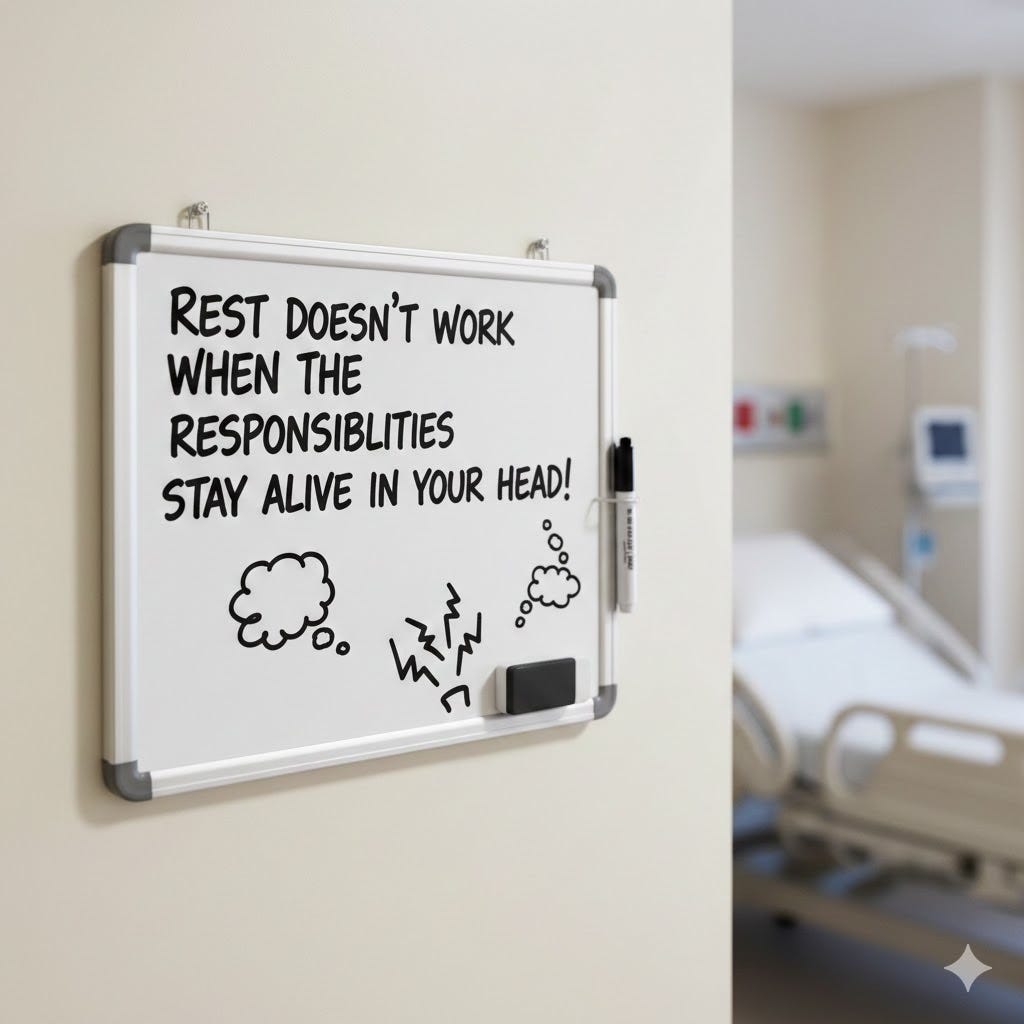
Burnout is typically described as the result of overuse: too much work, too much effort, too much demand.
From that framing, the solutions follow naturally… rest, boundaries, delegation, self-care.
And for some people, those solutions work.
But there is a growing group of women for whom none of this produces lasting relief…even when they follow every recommendation precisely.
They rest.
They delegate.
They reduce their workload.
They take time away.
And yet the exhaustion returns almost immediately.
Quietly. Persistently.
What’s missing from the conversation is not another tool or technique. It’s an accurate account of where the strain is actually coming from.
Most burnout frameworks assume exhaustion comes from effort.
But effort is not the only way systems extract energy.
There is another form of strain that does not show up on calendars or task lists, but taxes the system continuously.
It comes from being required.
Being required is different from being busy.
It means something will fail if you are not paying attention. It means continuity depends on your awareness. It means your absence introduces risk.
This kind of strain does not end when work pauses.
It simply goes dormant… and then reactivates the moment responsibility resumes.
That is why rest helps briefly but never resolves the issue.
The demand was never removed.
The women most affected by this are often the most capable.
They are reliable. They anticipate problems early. They compensate before consequences land.
Over time, systems reorganize around these traits.
Not maliciously. Not consciously.
Reliability attracts dependency. Competence absorbs slack. Anticipation becomes assumed.
Eventually, the system no longer just benefits from these women.
It relies on them.
When exhaustion comes from this configuration, personal solutions misfire.
Delegation changes who executes tasks but not who holds continuity. Boundaries reduce availability but increase monitoring. Self-care restores energy without reducing requirement.
Even insight fails.
Understanding the pattern does not remove the need to compensate for it.
This is why so many women feel as though they are “doing everything right” and still can’t rest.
They are not failing at self-care. They are responding rationally to systems that still require their vigilance to function.
At some point, the cost of holding continuity exceeds what one person can sustain.
Not emotionally. Structurally.
The system begins to fracture. Fatigue becomes constant. Stepping back feels dangerous.
These are not signs of weakness or lack of resilience. They are signals that the configuration itself has reached its limit.
No system can rely indefinitely on a single point of vigilance without degrading.
That principle applies in engineering, organizations, and families alike.
Until exhaustion is understood structurally, women will continue to be asked to adapt internally to problems that are not internal.
They will be told to cope better with conditions that require redesign. And blamed when adaptation fails.
There is language for this pattern. And there is work that addresses it at the level it actually exists.
But neither can be useful until the misdiagnosis is corrected.
If exhaustion returns the moment responsibility resumes, it may not be because you are doing too much.
It may be because too much depends on you continuing to notice.
That distinction changes everything.
I use the term Dependency Architecture Collapse™ to name this pattern, the point at which a system built on unspoken reliance reaches its structural limit.
It describes exhaustion that does not come from effort, but from being the continuity layer everything quietly depends on.
When responsibility, memory, and anticipation are centralized in one person for too long, collapse is not a personal failure.
It is a predictable design outcome. Naming it does not solve it, but it finally tells the truth about where the strain actually lives.